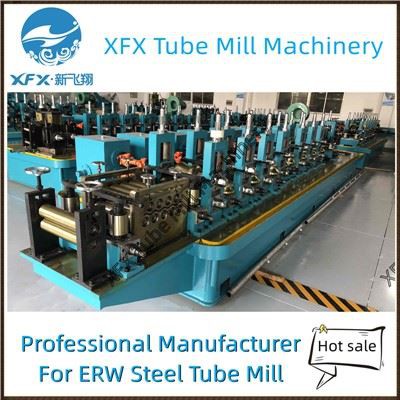
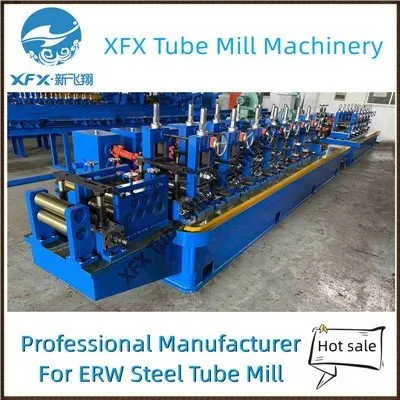
Founded in 2006, XFX Tube Mill Machinery Co., Ltd. has become one of the most professional and experienced steel tube mill manufacturers in China.
Why Choose Us
Rich Experience
With more than 10 years of designing and manufacturing experience, XFX can provide customers with high-quality steel pipe-making machines, advanced technical solutions, and high-quality services.
Wide Product Range
Our products include steel tube mills, ERW pipe mills, steel pipe making machines, MS pipe making machines, steel pipe manufacturing machines, tube mill rolls, steel pipe mills, etc.
Professional Sales Team
We have a professional sales team to support our customers with suitable pipe mill machine model selection, workshop designing, raw material(strip coil) supplier contracting, and contract signing.
Global Sales Network
Our products are sold to the domestic market and exported to overseas markets mainly in Thailand, Philippines, Cambodia, Vietnam, Russia, India, Sri Lanka, South Korea, Indonesia, Laos, Turkey, Morocco, Pakistan, Egypt, Angola, Benin, USA, etc.


Brief Introduction to Steel Tube Mill
A steel tube mill is a machine or industrial facility used in the manufacturing of tubing or pipes. It is a crucial piece of equipment in the metalworking and manufacturing industries, particularly in the production of steel pipes and tubes. Tube mills are used to create a wide range of cylindrical products, including pipes for various applications such as plumbing, construction, transportation, and more. Tube mills produce pipe and tube by taking a continuous strip of material and continuously roll forms it until the edges of the strip meet together at a weld station. At this point, the welding process melts and fuses the edges of the tube together and the material exits the weld station as welded tube.

Working Principle of Steel Tube Mill
Raw Material: Tube mills typically start with flat strips or coils of metal, often steel, although other materials like aluminum and copper can also be used.
Uncoiling: The raw material is uncoiled and fed into the tube mill.
Forming: In the forming section of the tube mill, the flat strip is passed through a series of rollers and other shaping tools. These rollers gradually bend the strip into a cylindrical shape, forming a tube.
Welding: In many tube mills, if the raw material is not a continuous strip, a seam welding process is used to join the edges of the strip together. High-frequency induction welding or other welding methods may be employed to create a strong and continuous seam along the length of the tube.
Sizing: After welding, the tube may go through additional rollers to ensure it has the desired dimensions, both in terms of diameter and wall thickness.
Cutting: The tube is cut to the desired length, often using a flying cutoff saw or a similar cutting mechanism.
Finishing: Depending on the application, the finished tube may undergo further processes such as straightening, end finishing, and surface treatment.
Quality Control: Throughout the manufacturing process, quality control measures are implemented to ensure the tube meets the specified standards and tolerances.
Advantages of Steel Tube Mill
High Quality
The quality of steel pipes produced by steel tube mill is high, and it can produce boiler pipes, oil well pipes and medium and low alloy steel pipes. The surface quality and dimensional accuracy of the steel pipe are better than those of the automatic pipe rolling mill.
Customizability
Steel tube mills offer the flexibility to produce a wide range of tube sizes, shapes, and thicknesses. This customizability caters to various industry requirements and allows for the production of tubes that meet specific specifications.
Reduced material wastage
The continuous production process of a steel tube mill minimizes material wastage, compared to traditional methods that involve cutting and welding. This results in cost savings and the ability to produce tubes with longer lengths.
Versatility
Steel tube mills can be used to produce various types of steel tubes, including round, square, rectangular, and oval tubes. This versatility makes them suitable for a wide range of applications in industries such as construction, automotive, infrastructure, and manufacturing.
Applications of Steel Tube Mill
1. Electrical Conduit: Steel tube mills are employed in manufacturing steel tubes for electrical conduit systems. These tubes serve as protective passageways for electrical wiring, ensuring safe and organized transmission of electrical currents.
2. Gas Transmission: Steel tubes produced by Steel tube mills are used for the transportation of natural gas over large distances. These tubes are designed to withstand high pressure and ensure efficient and safe gas transmission.
3. Liquid Transportation: Tube mills manufacture steel tubes for the transportation of liquids such as water, chemicals, and other fluids. These tubes are used in industries such as water supply, wastewater treatment, chemical processing, and food and beverage.
4. Oil And Gas Drilling: Tube mills play a crucial role in producing steel tubes used in oil and gas drilling operations. These tubes, commonly known as casing and tubing, provide structural support and facilitate the extraction of oil and gas from deep underground reservoirs.
5. Irrigation: Steel tubes manufactured by tube mills are utilized in irrigation systems to transport water for agricultural purposes. These tubes withstand exposure to harsh conditions and ensure the efficient distribution of water across fields.
6. Structural Tubing: Tube mills produce steel tubes used in the construction of buildings, bridges, and other structures. Structural tubing provides strength and support while maintaining flexibility in construction applications.
7. Petrochemical Pipe: Tube mills manufacture steel tubes for the petrochemical industry, where they are used in the transportation of various chemicals and fluids. These tubes are resistant to corrosion and high temperatures, ensuring the safe and efficient flow of petrochemical products.
8. Hydroform Tubing: Tube mills produce hydroform tubing, which is used in various industries, including automotive, aerospace, and manufacturing. Hydroformed tubes are shaped through a hydraulic process for lightweight and structurally efficient applications.
9. Mechanical Tubing: Steel tubes produced by tube mills are used in various mechanical applications, such as machinery components, automotive parts, and equipment manufacturing. Mechanical tubing ensures the strength, durability, and precision required for these applications.
10. Exhaust Pipes: Tube mills manufacture steel tubes for exhaust systems in automotive and industrial applications. These tubes endure high temperatures and corrosive gases, ensuring efficient and safe exhaust emissions.
Components of Steel Tube Mill
Uncoiler
The uncoiler is responsible for unwinding and feeding the raw material (usually a coil of steel strip) into the tube mill machine continuously. It ensures a consistent supply of material for the forming process.
Shear End Welder
In cases where the raw material coils need to be joined to ensure continuous production, a shear end welder is used to cut and weld the ends of two coils together seamlessly.
Forming Section
The forming section is the core of the SS tube mill machine. It consists of several sets of rollers that progressively shape the flat strip into the desired tube profile. Roll stands with different configurations are used to achieve different tube shapes, such as round, square, rectangular, or oval.
Welding Section
In the case of ERW or HF welded tubes mill, the welding section is where the edges of the formed strip are welded together. Different welding methods, such as electric resistance welding or high-frequency induction welding, are employed based on the type of tube being produced.
Sizing Section
The sizing section further shapes the welded tube to its final dimensions and ensures the accuracy and consistency of the tube's outer diameter.
Cutting and Finishing Section
Once the tube is formed and welded, it is cut to the required length using a cutting mechanism. The finished tubes may undergo additional finishing processes, such as straightening, end facing, and deburring, to meet specific quality standards.
1. Tube Diameter and Wall Thickness: Tailoring to Application
The first step in selecting a steel tube mill is to consider the diameter and wall thickness of the tubes you intend to produce. Different applications require specific dimensions, so choose a mill that can accommodate your required range. Whether you're crafting small-diameter precision tubes or larger pipes, matching the mill's capabilities to your needs is paramount.
2. Material Compatibility: Versatility and Expertise
The type of metal you'll be working with is a crucial factor. Steel tube mills can handle a variety of materials, including steel, stainless steel, aluminum, and more. Ensure that the mill you choose is compatible with the materials you intend to process. Additionally, consider the mill's expertise in working with specific materials, as different metals may require specialized processes and equipment.
3. Production Volume: From Batch to Continuous
The production volume you anticipate is a key determinant in selecting the right steel tube mill. If you require high-volume production, a continuous mill with automated processes may be the ideal choice. For smaller batches or specialized applications, a batch-style mill might suffice. Consider your projected production needs and choose a mill that aligns with your capacity requirements.
4. Welding Technology: Ensuring Seam Integrity
Welding plays a pivotal role in tube and pipe production. Different mills employ various welding technologies, such as high-frequency induction welding, TIG welding, or laser welding. The welding method chosen impacts the quality and integrity of the seam. Research the welding technology used by different mills to ensure it meets your quality standards.
FAQ
Q: What does a pipe mill do?
Q: What kind of materials can be made with a steel tube mill?
Q: What are the maintenance requirements of a steel tube mill?
Q: What kind of safety measures are required in a steel tube mill?
Q: Can a steel tube mill produce stainless steel tubes?
Q: Can a steel tube mill produce seamless pipes?
Q: What kind of finishing can be applied to steel tubes?
Q: How are the steel tubes formed in a tube mill?
Q: Is the production process continuous or batch-based in a steel tube mill?
Q: How is the size and thickness of steel tubes controlled during the manufacturing process?
Q: Can different grades of steel be processed in a tube mill?
Q: Can a steel tube mill produce tubes with different surface finishes?
Q: How are defects in steel tubes identified and corrected during the manufacturing process?
Q: Can a steel tube mill handle large-scale production volumes?
Q: Are steel tube mills automated or require manual intervention?
Q: Can a steel tube mill produce high-pressure tubes for specialized applications?
Hot Tags: steel-tube-mill, China steel-tube-mill manufacturers, suppliers, factory, Tube and Pipe Manufacturing, pipe mill manufacturers, manufacturing process of square tube, erw pipe mill for sale, ERW Pipe Mill For Carbon Steel Tube, Mill Machinery